How Debt Consolidation Works and When Its a Good Idea?
Since you’re most likely suffering with debt in one way or another if you’re reading this, let’s have an open discussion about it. Furthermore, debt can be oppressive if we’re being honest. Every phone vibration becomes an anxiety attack, it infiltrates your day thinking, and it keeps you awake at night.
Consolidating debt is something you’ve heard of. money’s one of those monetary words that people use as if money were the secret to achieving freedom. What does it actually mean, though? And is it a good idea at all? Let’s dissect it from a human perspective.
Get a quote today
How Debt Consolidation Works and When Its a Good Idea
Debt consolidation: What Is It?
Consolidation is the process of combining several debts into one loan, such as shop cards, credit cards, personal loans, and sometimes even overdue bills. You now only have one monthly payment to manage rather than multiple ones.
Imagine that you are tidying up a disorganized space that is full of sporadic boxes. You stack them neatly in a single large box rather than tripping over each one individually. The room is simpler to manage, but it doesn’t instantly get bigger.
You still owe money when you consolidate your debt, but the terms are usually easier to handle and the interest rate is usually better.
Debt Consolidation Types
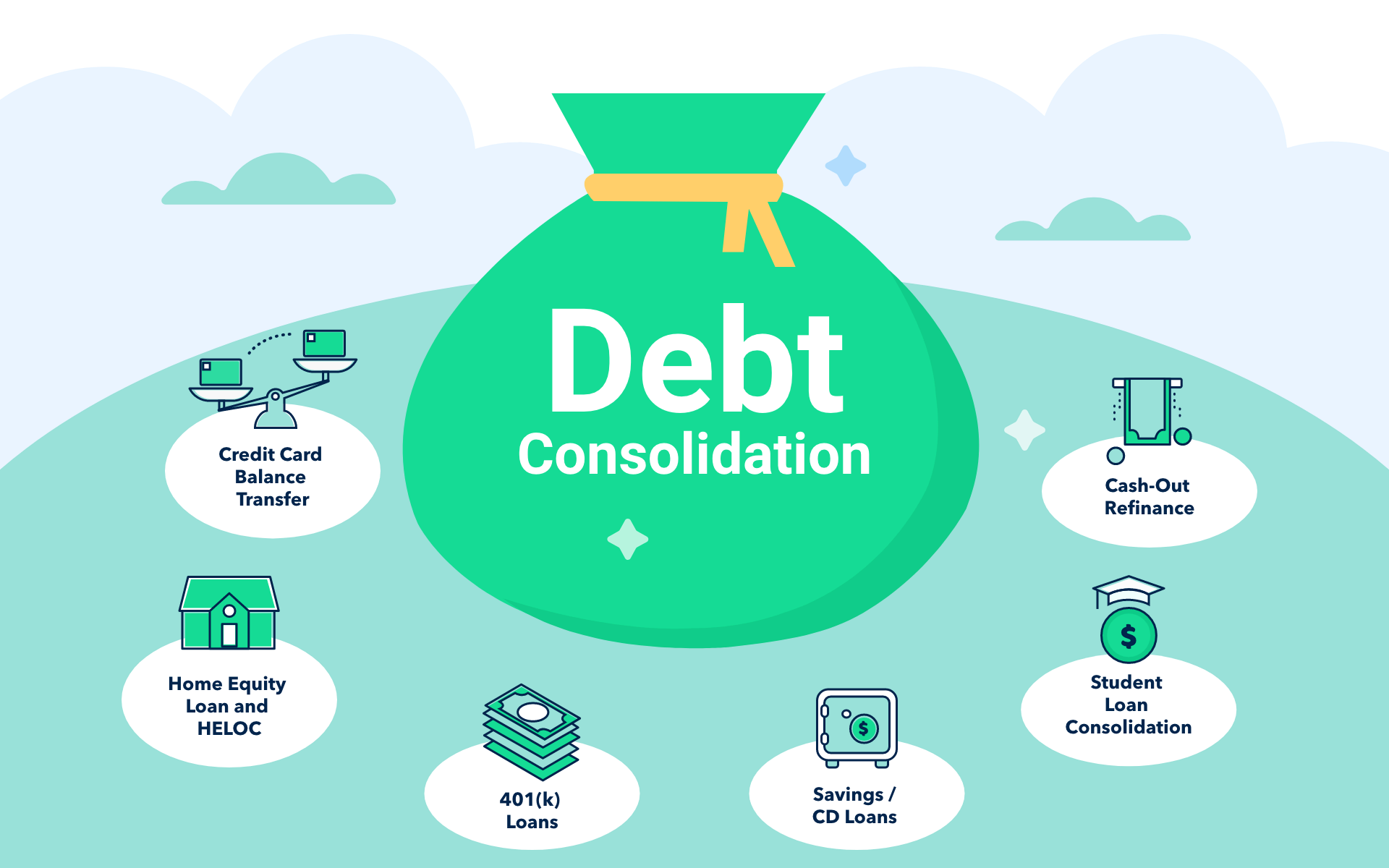
Debt consolidation can be done in a few different ways. Let’s examine the most prevalent ones:
Personal Loan for Debt Consolidation
To pay off your current debts, you obtain a fixed-term loan from a bank, credit union, or internet lender. After that, you make monthly payments to repay the new loan.
Credit cards that offer a 0% APR introductory period (such as 12–18 months) are known as balance transfer credit cards. You move all of your current credit card debt to this one card, and you make a concerted effort to pay it off before the promotion expires.
A home equity loan, also known as a home equity line of credit (HELOC), allows you to borrow against the equity of your house and utilize it to settle your bills. This carries a big risk but frequently offers minimal interest. Collateral is your home. You risk losing it if you don’t pay back.
Debt Management Plan (via a credit counselor)
A nonprofit credit counseling organization bargains with your creditors for reduced interest rates. After that, the agency receives your one monthly payment and disburses it to your creditors.
When It Makes Sense to Consolidate Debt
To be clear, not everyone is a good candidate for debt consolidation. But it can be a wise choice in the correct circumstances. Here are some indications that it might be the best course of action for you:
You’re Making Exorbitant Interest Payments
Consolidating into a lower-interest loan (say 9% or 12%) could save you a significant amount of money over time if the interest on your credit cards is quite high, say 20% or higher.
You’re Having Trouble Keeping Up with Several Payments
Consolidating your debt can let you breathe easier. It’s easier to handle one payment than five. You lessen the chance of late fines, missed payments, and credit damage.
You can get a better rate because your credit score is high enough.
Borrowers with good credit receive the greatest rates from lenders. You can be eligible for a consolidation loan with advantageous terms if your credit score is still in a respectable range.
You’re Determined to Pay Off Your Debt
Consolidating debt is a tool, not a reset button. It can speed up the process if you’re serious about altering your behavior and achieving debt freedom.
When It May Not Be a Good Idea to Consolidate Debt
Let’s get back to reality. This isn’t a magic solution. There are drawbacks to it as well.
You haven’t addressed the debt’s root cause.
Consolidating won’t solve your problem if it was caused by excessive expenditure. If you feel like you’ve been “rescued,” it could potentially make matters worse. The cycle will continue if discipline is lacking.
The New Loan Has Unstated Charges
Keep an eye out for any fines, closing costs, origination fees, or debt transfer fees. Your savings may be used up by these, rendering the consolidation useless.
You’ll Eventually Pay More
Although a smaller monthly payment can seem fantastic, you might pay more in interest overall if it is spread out over more years.
You Put Secured Assets at Risk
You are now endangering your house or vehicle when you combine unsecured obligations, such as credit cards, into a secured loan, such as a home equity loan.
Actions to Take Prior to Consolidation
Don’t rush if you’re considering making the leap. Take your time and follow these steps:
- Enumerate all of your debts: Add the monthly payments, interest rates, and the total amount you owe. This will enable you to see the big picture.
- Verify Your Credit Score: The type of consolidation loan you are eligible for depends on your credit score. You might want to start by working on it if it’s low.
- Examine lenders by contrasting terms, rates, and reviews. Don’t accept the first offer without question. There are predatory lenders, particularly on the internet.
- Determine the Total Cost: Examine the differences between the total amount you will pay with and without consolidation, including interest and fees. If necessary, make use of a debt payment calculator.
- Make a Repayment Plan: Ensure that you have a well-thought-out plan. It’s not enough to just bundle your debt into a new, flashy container. It’s about getting rid of it at last.
Honest Conversation: Is It Valuable?
The truth is that, if you give it the consideration it requires, debt consolidation can feel like a lifesaver. It can help you see a clear road to freedom, lower your monthly payments, and reduce your stress levels.
It’s not a magic trick, though.
No loan or plan can help you if you revert to your old behaviors, such as charging more than you make, living without a budget, or missing payments.
For this reason, I always advise combining consolidation with a change in perspective. Take advantage of this chance to start over, both financially and in your relationship with money.
Concluding Remarks
Having debt might make you feel burdened. It can cause you to feel stuck, postpone your ambitions, and rob you of peace. One tool—not the only one—that can be quite effective if utilized properly is debt consolidation.
Avoid falling for glitzy pitches or easy remedies. Be truthful with yourself. If you’re prepared to put in the effort and make a significant shift, consolidation can be the first step toward debt freedom.
Take charge. Take a small breather. And keep in mind that you’re not doing this alone. Every well-off individual you look up to? They also needed to start someplace.


