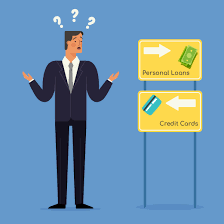
Which Should You Choose Between Personal Loans or Credit Cards?
Let’s face it, everyone has experienced financial hardship at some point in their lives. Borrowing frequently becomes an alluring choice, whether it’s for an emergency, a significant purchase, debt consolidation, or just trying to make ends meet. Additionally, credit cards and personal loans are typically the two entrances you see.
While both might be useful in some circumstances, picking the incorrect one can cause more harm than good. It wasn’t an easy decision for me to make myself. You’re not alone, though, if you’re having to make this choice, and this post will help you navigate it honestly.
Get a financial quote today
Which Should You Choose Between Personal Loans or Credit Cards
So let’s dissect it: Which is better, a credit card or a personal loan?
First, learn the fundamentals.
A Personal Loan: What Is It?
You can obtain a personal loan in one lump sum from a bank, credit union, or internet lender. Over a predetermined period of time, say one to five years, you pay it back in fixed monthly installments at a variable or fixed interest rate.
Advantages:
- Monthly payments that are predictable
- Interest rates that are lower than those of credit cards
- can be applied to debt consolidation or large expenses.
Cons:
- You’re making a long-term commitment to repay
- Your credit history and score determine your approval.
- Origination or early repayment fees are levied by certain lenders.
A credit card: what is it?
A revolving line of credit is provided by a credit card. You can borrow up to a certain amount and then borrow again when you pay it back. Even though you only have to pay the minimum amount due each month, carrying a balance can quickly result in interest accruing.
Advantages:
- Adaptable choices for repayment
- Useful for ordinary shopping and emergencies
- frequently includes incentives or cashback deals.
Cons:
- High rates of interest
- It’s simple to overspend and accumulate debt.
- Years of debt can be stretched by minimum payments.
When Is a Personal Loan Appropriate?
In some circumstances, a personal loan is far more sensible than a credit card:
You are consolidating debt with a high interest rate.
Assume that you have several credit cards with substantial balances and interest rates of at least 20%. You can pay everything off more quickly and affordably with a personal loan with an interest rate of, say, 10%.
Why this works? You consolidate all of your loans into one and concentrate on making a single monthly payment, which is frequently less expensive overall.
You Require a Big One-Stop Payment
A personal loan covers the entire cost up front if you’re planning a major expense, such as a wedding, medical operation, or home repair. You are fully aware of the amount you will receive and the date of repayment.
The reason this works is that credit cards aren’t made for big, one-time purchases. It’s possible that your credit limit isn’t even high enough to pay for it.
You Desire Order
We occasionally require structure in order to stay on course. If you have previously battled with credit cards, a personal loan can help you develop financial discipline by requiring you to make regular repayments within a predetermined timeline.
When Is It Appropriate to Use a Credit Card?
You can benefit from credit cards, but only if you use them wisely and sensibly. Here’s when using one makes sense:
You Require Smaller, Short-Term Credit
Without the trouble of loan applications, a credit card can help if you need to pay for groceries, a payment, or to get through a difficult month and you know you can pay it off soon.
Why this is effective: You only pay interest on what you don’t pay off before the end of the month. Therefore, you may choose to pay no interest at all if you are certain that you will pay the remaining amount.
You Desire Benefits or Rewards
Certain credit cards provide purchase protection, travel points, or cashback. You can get these advantages practically for free if you practice self-control and pay the entire amount due each month.
The reason this works is that you are receiving a small amount of money in exchange for purchases you would have made anyhow, such as food or fuel.
You Must Have Financial Flexibility
Credit cards let you borrow money again up to your credit limit, unlike personal loans that only provide you a one-time sum. If your financial needs are erratic, that can be useful.
Important Things to Think About Before Making a Choice
After discussing when to use each, you should consider the following five questions before making your decision:
What is the money being used for?
Is it a series of minor expenses or a single, significant one? A personal loan is the best option for one-time needs. Take into account a credit card for continued flexibility.
How financially disciplined are you?
It’s fantastic if you’re the kind of person who pays off your credit card in full every month. But if you tend to let balances pile up, you’re better off with a personal loan to avoid long-term debt.
Are you able to manage fluctuating interest rates?
Generally higher than loan rates, credit card rates are subject to change. Personal loans provide the security of fixed payments if you’re risk averse.
Are you eligible for choices with low interest rates?
Your credit score will determine this. You might be eligible for low credit card and personal loan rates if your credit is good. However, personal loans may have better terms than high-interest credit cards if your credit is not very good.
How soon can you pay back?
A credit card could save you money if you can pay off the entire amount within a few months. However, a loan will probably be less expensive in the long run if you require longer time.
Which One Is the Winner?
There isn’t a single solution that works for everyone. Depending on how you use them, credit cards and personal loans each have a place.
A personal loan should be chosen if
- You require a sizable amount up front.
- You’re combining your debts.
- You desire a planned repayment schedule.
- You’re concerned about affordability over the long run.
Select a credit card in case:
- You desire adaptable access to money.
- You can swiftly settle your balance.
- You wish to accrue points or awards.
- You’re managing less expensive bills.
Concluding Remarks
My personal experience has taught me that poorly handled debt is the problem, not debt itself. Loans are not panaceas, and credit cards are not bad things. They are instruments. Whether they contribute to or hinder your future depends on how you use them.
Speak with a financial expert or someone who has experienced the same situation if you’re not sure. And be honest with yourself no matter what you decide. The objective is to borrow wisely, not just to borrow.
Choose what’s best for your life, not simply your pocketbook. It’s worth it for your financial peace of mind.


